Tuesday, November 22, 2011

Friday, November 18, 2011
Friday, November 4, 2011

School (Roosevelt, The River of Doubt)
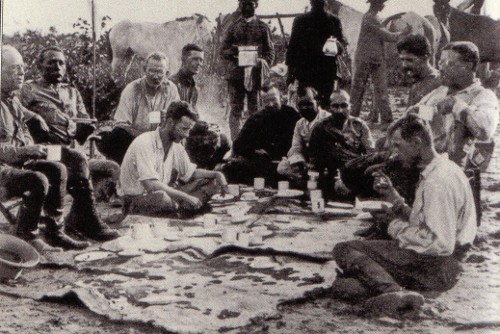
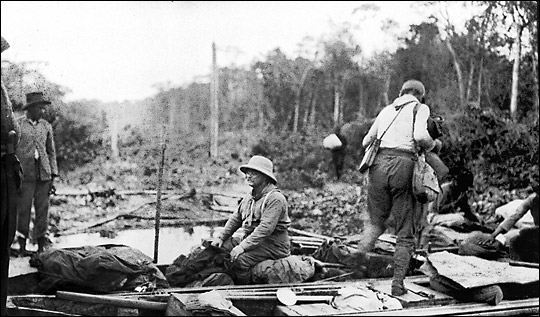
In December of 1913, ex-president Theodore Roosevelt and a small group of men, which included his son Kermit, began to explore the River of Doubt. Before the group even got to the river, they had to abandon some of their supplies because some of their oxen and mules died. When they got to the river, they had to abondom half of their remaining supplies because the duggout canoes they were using were not stable enough to hold all of the weight.
The river contained many rapids. When the group camped on the shore, almost all of the people on the expedition got infected with malaria, including Roosevelt. Roosevelt also cut his leg on a sharp rock and the cut got infected, and his temperature rose to 105 degrees Fahrenheit.
Later, Colnel Rondon gets attacked by an indiginous tribe of indians and survives. One of the porters, who was lazy and had a bad temper, killed a man because he was hungry, and another man drowned in an accident on the river. When the group reaches a 30ft waterfall, Kermit uses his rope skills to lower the canoes and the people over the waterfall safely.
Only three men died on this expedition.


The river contained many rapids. When the group camped on the shore, almost all of the people on the expedition got infected with malaria, including Roosevelt. Roosevelt also cut his leg on a sharp rock and the cut got infected, and his temperature rose to 105 degrees Fahrenheit.
Later, Colnel Rondon gets attacked by an indiginous tribe of indians and survives. One of the porters, who was lazy and had a bad temper, killed a man because he was hungry, and another man drowned in an accident on the river. When the group reaches a 30ft waterfall, Kermit uses his rope skills to lower the canoes and the people over the waterfall safely.
Only three men died on this expedition.


Monday, October 31, 2011

Wednesday, October 26, 2011
School (midterm reveiw part 1)
1. Vocabulary Terms
a. Creative Commons- a license that lets you dictate how others may use your work
b. Intellectual property- any property that is created using original thought
c. Copyright- the legal right granted to an author, composer, playwright, publisher, or distributor to exclusive publication, production, sale, or distribution of a literary, musical, dramatic, or artistic work
d. Public domain- any work that can be accessed by the public and used freely
e. Freeware- copyrighted software given away for free by the author
f. Shareware- Software distributed on the basis of an honor system
g. Open source- refers to a program in which the source code is available to the general public for use and/or modification from its original design free of charge
h. Attribution- giving credit to the author
i. Commercial use- money can be made off the copyrighted material
j. Derivative- the copyrighted work cannot be altered
k. Share-alike- the altered work has to be shared with the public
l. Firewall- a system designed to prevent unauthorized access to or from a private network
m. Virus- a program or piece of code that is loaded onto your computer without your knowledge and runs against your wishes
n. Hacking- To modify a program, often in an unauthorized manner, by changing the code itself
o. Piracy- illegally copying copyrighted material
p. Malware- software designed specifically to damage or disrupt a system
q. Phishing- The act of sending an e-mail to a user falsely claiming to be an established legitimate enterprise in an attempt to scam the user into surrendering private information that will be used for identity theft
r. Identity theft- stealing someone else’s identity
s. Data back-ups- To copy files to a second medium (a disk or tape) as a precaution in case the first medium fails
t. Cookies- a message given to a Web browser by a Web server
u. File sharing- sharing files online
2. Federal Trade Commission
a. The FTC is who you need to contact if you have your identity stolen
b. The FTC is also in charge of copyrights and the CC
a. Creative Commons- a license that lets you dictate how others may use your work
b. Intellectual property- any property that is created using original thought
c. Copyright- the legal right granted to an author, composer, playwright, publisher, or distributor to exclusive publication, production, sale, or distribution of a literary, musical, dramatic, or artistic work
d. Public domain- any work that can be accessed by the public and used freely
e. Freeware- copyrighted software given away for free by the author
f. Shareware- Software distributed on the basis of an honor system
g. Open source- refers to a program in which the source code is available to the general public for use and/or modification from its original design free of charge
h. Attribution- giving credit to the author
i. Commercial use- money can be made off the copyrighted material
j. Derivative- the copyrighted work cannot be altered
k. Share-alike- the altered work has to be shared with the public
l. Firewall- a system designed to prevent unauthorized access to or from a private network
m. Virus- a program or piece of code that is loaded onto your computer without your knowledge and runs against your wishes
n. Hacking- To modify a program, often in an unauthorized manner, by changing the code itself
o. Piracy- illegally copying copyrighted material
p. Malware- software designed specifically to damage or disrupt a system
q. Phishing- The act of sending an e-mail to a user falsely claiming to be an established legitimate enterprise in an attempt to scam the user into surrendering private information that will be used for identity theft
r. Identity theft- stealing someone else’s identity
s. Data back-ups- To copy files to a second medium (a disk or tape) as a precaution in case the first medium fails
t. Cookies- a message given to a Web browser by a Web server
u. File sharing- sharing files online
2. Federal Trade Commission
a. The FTC is who you need to contact if you have your identity stolen
b. The FTC is also in charge of copyrights and the CC
Sunday, October 16, 2011
Subscribe to:
Posts (Atom)